
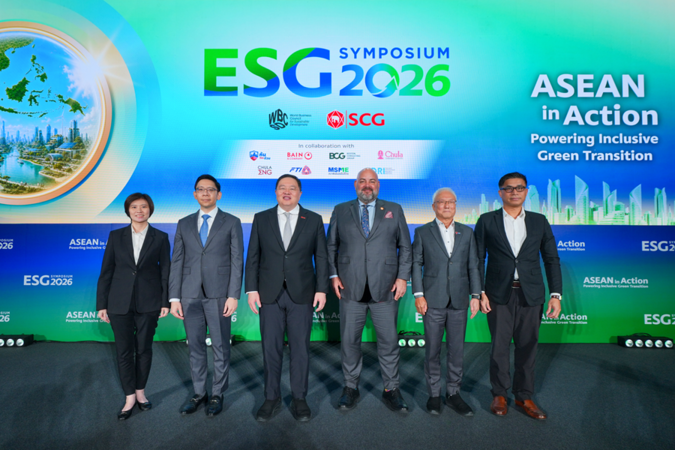
ESG Symposium 2026 เดินหน้าจากเวทีหารือสู่การขับเคลื่อนในระดับภูมิภาค ภายใต้แนวคิด “ASEAN in Action: Powering Inclusive Green Transition” โดยต่อยอดข้อเสนอจากปีที่ผ่านมา สู่ 3 วาระสำคัญ ได้แก่ Energy Transition, Just Transition และ Climate Adaptation พร้อมเชื่อมความร่วมมือแบบ Public–Private–People Partnership (4P) เพื่อผลักดันแนวทางจากระดับนโยบายสู่การลงมือทำในภาคธุรกิจและพื้นที่ และนำบทเรียนจากประเทศไทยไปพิจารณาปรับใช้ในบริบทอื่นของอาเซียน
ESG Symposium 2026 เป็นเวทีความร่วมมือระดับภูมิภาค โดยเอสซีจีจัดร่วมกับ World Business Council for Sustainable Development (WBCSD) และพันธมิตรทุกภาคส่วน เชื่อมโยงผู้นำและผู้เชี่ยวชาญจากภาครัฐ ภาคธุรกิจ ภาคการเงิน องค์กรระหว่างประเทศ และภาควิชาการ เพื่อแลกเปลี่ยนองค์ความรู้และแนวทางปฏิบัติ พร้อมร่วมกำหนดแนวทางรับมือความท้าทายสำคัญของอาเซียน ทั้งด้านความมั่นคงทางพลังงาน การปรับตัวต่อการเปลี่ยนแปลงสภาพภูมิอากาศ และการสร้างเศรษฐกิจและงานสีเขียวที่กระจายโอกาสและเสริมความยืดหยุ่นให้กับภูมิภาค
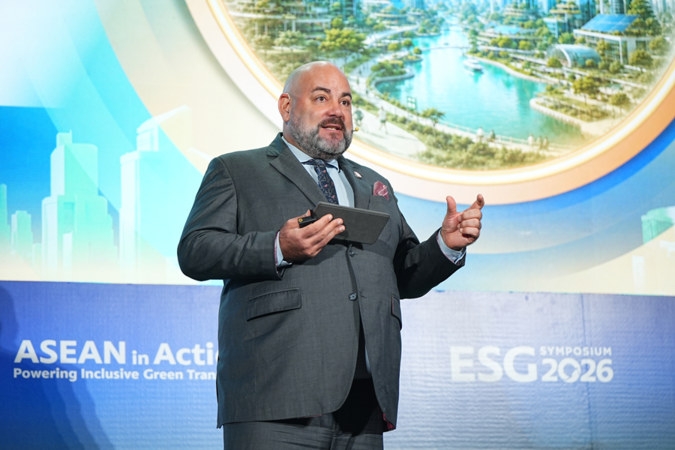
Mr. Joe Phelan, Executive Director, Asia Pacific, World Business Council for Sustainable Development (WBCSD) กล่าวว่า “การเปลี่ยนผ่านด้านความยั่งยืนเชื่อมโยงกับความสามารถในการแข่งขัน ความมั่นคง การลงทุน ซึ่งเป็นทั้งความท้าทายและโอกาสสำคัญของอาเซียน หัวใจสำคัญคือการเชื่อมโยงนโยบาย การลงทุน เทคโนโลยี และผู้คนผ่านความร่วมมือระหว่างภาครัฐ ภาคธุรกิจ ภาคการเงิน และชุมชน เพื่อขับเคลื่อนอาเซียนสู่การเติบโตอย่างยั่งยืนในระยะยาว”
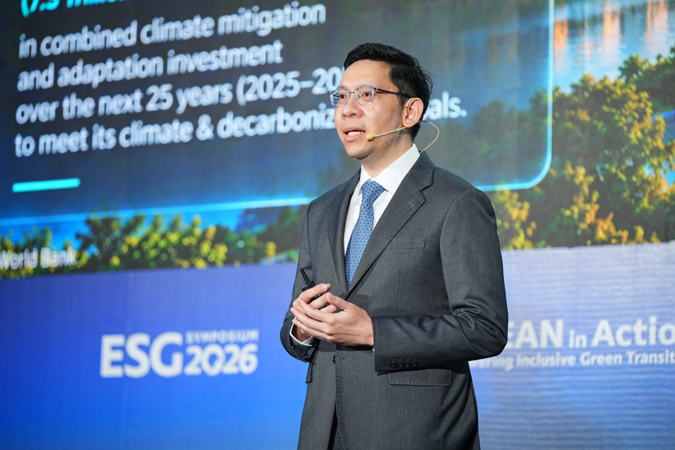
สำหรับประเทศไทย ภาคธุรกิจจะมีบทบาทสำคัญในการเปลี่ยนทิศทางระดับโลกให้เป็นการลงมือทำร่วมกัน โดยเฉพาะการช่วยให้ SMEs และผู้ประกอบการในห่วงโซ่อุปทานสามารถปรับตัวและเติบโตไปพร้อมกับเศรษฐกิจสีเขียว ด้าน ดร.พชรพจน์ นันทรามาศ ผู้ช่วยกรรมการผู้จัดการใหญ่ และ Chief Economist ธนาคารกรุงไทย ชี้ว่า “ประเทศไทยต้องใช้ Green Transition เป็นโอกาสในการยกระดับขีดความสามารถในการแข่งขันและดึงดูดการลงทุนแห่งอนาคต โดยหัวใจสำคัญคือ การขับเคลื่อนแบบ End-to-End พร้อมสร้างการเปลี่ยนผ่านที่ทั่วถึง โดยธุรกิจรายใหญ่ร่วมยกระดับ SMEs ใน Supply Chain ให้ปรับตัวและเติบโตไปด้วยกัน ทั้งนี้ กกร. พร้อมนำข้อเสนอจากเวทีไปขับเคลื่อนต่อ ผ่านแพลตฟอร์ม Reinvent Thailand ร่วมกับภาคธุรกิจและภาคส่วนต่าง ๆ”
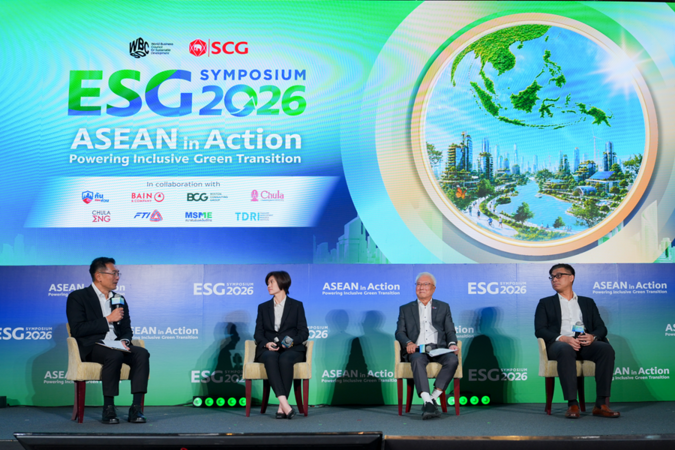
3 วาระสำคัญจากความคืบหน้าสู่โจทย์ที่ต้องเดินหน้าต่อ การหารือในปีนี้ต่อยอดจากข้อเสนอในปีที่ผ่านมา โดยแต่ละวาระสะท้อนทั้งความคืบหน้าและโจทย์ใหม่ที่ต้องร่วมกันผลักดันต่อ เพื่อพัฒนาแนวทางที่เหมาะกับบริบทของประเทศไทย และนำบทเรียนไปปรับใช้กับพื้นที่หรือบริบทอื่นต่อไป
- Energy Transition: สร้างความมั่นคงทางพลังงาน ควบคู่กับต้นทุนที่แข่งขันได้และการลดคาร์บอน จากข้อเสนอในปีที่ผ่านมา ที่มุ่งปลดล็อกการเข้าถึงไฟฟ้าหมุนเวียนผ่าน Third Party Access (TPA), Direct PPA และการลดข้อจำกัดด้านกฎระเบียบ เพื่อให้ภาคเอกชนสามารถขับเคลื่อนการเปลี่ยนผ่านได้จริง ปีนี้การหารือขยับไปสู่การยกระดับ “ความพร้อมของระบบพลังงาน”ทั้งการเพิ่มขีดความสามารถและความยืดหยุ่นของโครงข่ายไฟฟ้า เทคโนโลยี Grid-forming และการปรับแผนพัฒนากำลังผลิตไฟฟ้า (PDP) ให้สอดรับกับความต้องการพลังงานในอนาคต พร้อมมองต่อไปถึงเทคโนโลยีและแหล่งพลังงานใหม่ เช่น Small Modular Reactors (SMR) และ Biofuels ตลอดจนการเชื่อมโยงความร่วมมือระดับอาเซียนผ่าน ASEAN Power Grid ดร.อารีพร อัศวินพงศ์พันธ์ นักวิชาการอาวุโสนโยบายพลังงาน สถาบันวิจัยเพื่อการพัฒนาประเทศไทย (TDRI) เสนอให้วางระบบพลังงานที่รักษาสมดุลระหว่างความมั่นคง ต้นทุนที่แข่งขันได้ และเป้าหมายการลดคาร์บอน โดยเร่งพัฒนาโครงสร้างพื้นฐานและระบบพลังงานที่มีความยืดหยุ่น เพิ่มบทบาทของพลังงานแสงอาทิตย์และ Bioenergy ยกระดับ Grid Infrastructure พัฒนาแหล่งพลังงาน และเปิดพลังงานแบบเสรี เพื่อให้ภาคธุรกิจเข้าถึงพลังงานสะอาด ระบบไฟฟ้าส่งจ่ายได้อย่างต่อเนื่อง และรองรับความต้องการในอนาคต
- Just Transition: เปิดโอกาสให้ SMEs แรงงาน และชุมชนเติบโตไปพร้อมกัน จากการสนับสนุน SMEs ในปีที่ผ่านมา ผ่านองค์ความรู้และเครื่องมือ เช่น NZAP และ Go Together ปีนี้มีแนวทางเพิ่มเติม ได้แก่ Funding Connect, SME Green Transition Plus สำหรับ SMEs ภาคอุตสาหกรรม เพื่อช่วยให้ผู้ประกอบการเข้าถึงความรู้ เทคโนโลยี เงินทุน และโอกาสทางธุรกิจมากขึ้น นายวีรชัย มั่นสินธร รองประธานสภาอุตสาหกรรมแห่งประเทศไทย และประธานสถาบันวิสาหกิจขนาดกลางและขนาดย่อมอุตสาหกรรมการผลิต เสนอให้การสนับสนุนผู้ประกอบการตามระดับความสามารถในการปรับตัวเพื่อออกแบบการสนับสนุนให้ตรงกับความต้องการ โดยเริ่มจากการคัดเลือกกลุ่มนำร่อง เพื่อสร้างต้นแบบแบบครบวงจรตั้งแต่สนับสนุนองค์ความรู้ เทคโนโลยี ทักษะ มาตรฐาน การเข้าถึงตลาด และแหล่งเงินทุน Funding Connect ก่อนถอดบทเรียนและขยายผล เพื่อให้ผู้ประกอบการ แรงงาน และชุมชนเข้าถึงโอกาสจากเศรษฐกิจสีเขียวและเติบโตไปด้วยกัน
- Climate Adaptation: จากการรับมือหลังเกิดภัย สู่การเตรียมพร้อมล่วงหน้า จากการพูดถึง Water Resilience ในปีที่ผ่านมา ปีนี้ต่อยอดสู่การใช้ AI Simulation Platform เพื่อประเมินความเสี่ยงน้ำท่วมและความเปราะบางของโครงสร้างพื้นฐาน พร้อมมีแผนเปิดให้สาธารณะเข้าถึงและมองต่อถึง Risk Mapping และ Simulation ในระดับอาเซียน เพื่อช่วยเตรียมรับมือความเสี่ยงจากน้ำท่วม พายุ และภัยพิบัติอื่น ๆ ด้าผศ.ดร.พงษ์ศักดิ์ สุทธินนท์ หัวหน้าภาควิชาวิศวกรรมแหล่งน้ำ คณะวิศวกรรมศาสตร์ จุฬาลงกรณ์มหาวิทยาลัย เสนอให้เปลี่ยนจากการแก้ปัญหาหลังเกิดผลกระทบไปสู่การคาดการณ์และลดความเสี่ยงล่วงหน้า โดยพัฒนา One Water Data Center เพื่อเชื่อมโยงข้อมูลน้ำ ระบบคาดการณ์ และการแจ้งเตือนภัยร่วมกับท้องถิ่น ควบคู่กับการลงทุนในโครงสร้างพื้นฐานแบบ Dual-use ซึ่งใช้ประโยชน์ได้ทั้งในภาวะปกติและภาวะวิกฤต พร้อมต่อยอดการบริหารจัดการน้ำสู่ Water Economy เพื่อลดความสูญเสีย รักษาความต่อเนื่องของภาคธุรกิจ และสร้างคุณค่าทางเศรษฐกิจและสังคมในพื้นที่
ผลจากการหารือเตรียมนำไปสรุปเป็น White Paper เพื่อเสนอต่อภาครัฐและหน่วยงานที่เกี่ยวข้อง ใช้ประกอบการพิจารณานโยบายและพัฒนากลไกสนับสนุน Inclusive Green Transition พร้อมเชื่อมโยงกับเวทีภาคธุรกิจและเครือข่ายความร่วมมือที่เกี่ยวข้อง เพื่อผลักดันข้อเสนอสู่การหารือเชิงนโยบายและการทดลองดำเนินงานในพื้นที่
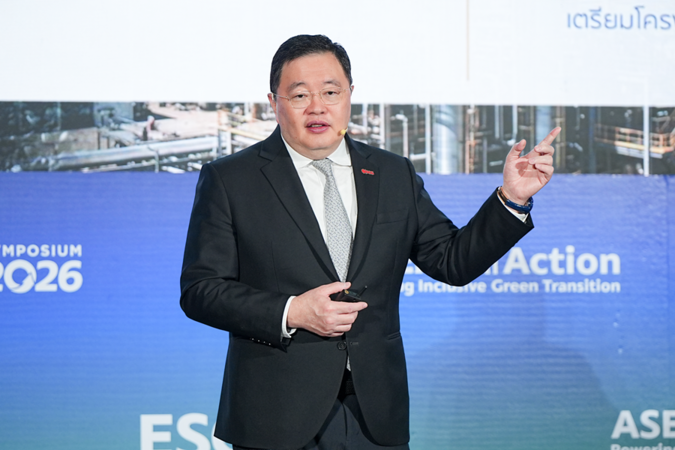
นายธรรมศักดิ์ เศรษฐอุดม กรรมการผู้จัดการใหญ่ เอสซีจี กล่าวว่า “จากข้อเสนอและการขับเคลื่อนในปีที่ผ่านมา วันนี้เราเห็นความคืบหน้าทั้ง 3 วาระอย่างชัดเจน ไม่ว่าจะเป็นด้าน Energy Transition, Just Transition และ Climate Adaptation โจทย์ที่สำคัญในวันนี้คือ การนำสิ่งที่เราได้เรียนรู้และลงมือทำมาตลอดหลายปี มาขยายผลให้เกิดขึ้นในวงกว้างมากขึ้น ซึ่งเราเห็นแล้วว่าความร่วมมือแบบ Public–Private–People Partnership หรือ (4P) สามารถทำให้เกิดผลได้จริง โดยภาครัฐช่วยสร้างเงื่อนไขที่เอื้อต่อการลงมือทำ ภาคเอกชนนำเทคโนโลยีและเงินลงทุนมาร่วมทดลอง ขณะที่ภาคประชาชนเข้ามามีส่วนร่วมในการกำหนดโจทย์ของแต่ละพื้นที่ หรือ Area-Based Approach จากบทเรียนที่ จ.สระบุรี เราควรนำโมเดล 4P นี้ ไปขยายผลยังพื้นที่อื่นๆ โดยเริ่มจากการศึกษาความต้องการและปัญหาในแต่ละพื้นที่ ควบคู่กับการหาพันธมิตรที่เหมาะสม เพื่อนำบทเรียนไปสู่การลงมือปฏิบัติจริง และต่อยอดความร่วมมือกับนานาประเทศ
หากเราสามารถขยายความร่วมมือในลักษณะนี้ได้อย่างเป็นรูปธรรม ก็จะช่วยเร่งการเปลี่ยนแปลง สร้างเศรษฐกิจที่มีขีดความสามารถในการแข่งขัน ควบคู่ไปกับการรับมือกับการเปลี่ยนแปลงสภาพภูมิอากาศได้อย่างมีประสิทธิภาพ และที่สำคัญคือเปิดโอกาสให้ทุกภาคส่วนสามารถเติบโตไปด้วยกัน”
ESG Symposium 2026 Unites ASEAN Efforts, Moving from Proposals to Real Action: Building on Three Key Agendas Toward 4P Collaboration That Links Policy, Business and Communities to Drive a Tangible and Scalable Transition
Bangkok, 6 October 2026 – ESG Symposium 2026 is advancing from a forum for dialogue to regional-level action. Under the theme “ASEAN in Action: Powering Inclusive Green Transition,” the Symposium builds on last year’s proposals to advance three key agendas: Energy Transition, Just Transition and Climate Adaptation. It also links these agendas with Public–Private–People Partnership (4P) collaboration, in order to move approaches from the policy level to implementation in the business sector and local communities, and to bring lessons from Thailand into consideration for adaptation in other ASEAN contexts.
ESG Symposium 2026 is organized as a regional collaboration platform by SCG together with the World Business Council for Sustainable Development (WBCSD) and partners from all sectors. It connects leaders and experts from government, business, finance, international, organization and academia to exchange knowledge and practices. It also brings them together to shape responses to ASEAN’s key challenges, namely energy security, adaptation to climate change, and the creation of a green economy and green jobs that distribute opportunities and strengthen the region’s resilience.
Mr. Joe Phelan, Executive Director – Asia Pacific, World Business Council for Sustainable Development (WBCSD), said: “The sustainability transition is linked to competitiveness, security and investment, which presents both a significant challenge and an important opportunity for ASEAN. The key lies in connecting policy, investment, technology and people through collaboration among government, business, the financial sector and communities, in order to drive ASEAN toward sustainable growth over the long term.”
In Thailand, the business sector will play an important role in turning global direction into collective action, particularly by helping SMEs and entrepreneurs in the supply chain adapt and grow alongside the green economy. Dr. Phacharaphot Nuntramas, Krungthai Chief Economist & JSCCIB Economist, noted: “Thailand must use the Green Transition as an opportunity to enhance its competitiveness and attract future investment. The key is end-to-end implementation, creating an inclusive transition in which large businesses help upgrade SMEs in their supply chains so that they can adapt and grow together. In addition, the Joint Standing Committee on Commerce, Industry and Banking (JSCCIB) is ready to carry the proposals from this forum forward through the Reinvent Thailand platform, together with the business sector and other stakeholders.”
Three Key Agendas: From Progress to the Challenges Ahead This year’s discussions build on the proposals from last year, with each agenda reflecting both the progress made and the new challenges that must be advanced jointly. The aim is to develop approaches suited to Thailand’s context and to apply the lessons to other areas and contexts.
1) Energy Transition: Building energy security alongside competitive costs and decarbonization
Last year’s proposals aimed to unlock access to renewable electricity through Third Party Access (TPA), Direct PPA and the reduction of regulatory constraints, so that the private sector could genuinely drive the transition. This year, the discussion moves toward raising the “readiness of the energy system,” including enhancing the capacity and flexibility of the power grid, grid-forming technology, and adjusting the Power Development Plan (PDP) to align with future energy demand. It also looks further ahead to new technologies and energy sources such as Small Modular Reactors (SMR) and biofuels, as well as ASEAN-level cooperation through the ASEAN Power Grid. Dr. Areeporn Asawinpongphan, Research Fellow in Energy Policy at the Thailand Development Research Institute (TDRI), proposed establishing an energy system that balances security, competitive costs and decarbonization targets. She recommended accelerating the development of resilient infrastructure and energy systems, increasing the role of solar and bioenergy, upgrading grid infrastructure, developing energy sources, and liberalizing the energy market. This would enable businesses to access clean energy, ensure uninterrupted power transmission and distribution, and support future demand.
2) Just Transition: Enabling SMEs, workers and communities to grow together Last year, SMEs were supported through knowledge and tools such as NZAP and Go Together. This year, additional approaches include Funding Connect and SME Green Transition Plus for industrial SMEs, to help entrepreneurs gain greater access to knowledge, technology, funding and business opportunities.
Mr. Veerachai Monsintorn, Vice Chairman of the Federation of Thai Industries (FTI) and Chairman of Small and Medium Industry Institute and Chairman of Thai-Chinese Economic and Investment Institute, proposed that support for entrepreneurs be tailored to their capacity to adapt, so that assistance is designed to match their needs. He suggested starting with a selected pilot group to create a comprehensive prototype, covering support in knowledge, technology, skills, standards, market access and funding sources through Funding Connect, before distilling lessons and scaling up. The goal is for entrepreneurs, workers and communities to access opportunities from the green economy and grow together.
3) Climate Adaptation: From post-disaster response to advance preparedness Building on last year’s discussion of Water Resilience, this year the focus extends to an AI Simulation Platform for assessing flood risk and infrastructure vulnerability. There are plans to make the platform publicly accessible, and to look further toward ASEAN-level Risk Mapping and Simulation to help prepare for risks from floods, storms and other disasters. Asst. Prof. Dr. Pongsak Suttinon, Head of the Department of Water Resources Engineering, Faculty of Engineering, Chulalongkorn University, proposed shifting from addressing problems after impacts occur to forecasting and reducing risks in advance. He suggested developing a One Water Data Center to integrate water data, forecasting systems and early warning systems together with local communities. This would go alongside investment in dual-use infrastructure that serves both normal and crisis conditions. He also proposed extending water management toward a Water Economy, in order to reduce losses, sustain business continuity, and create economic and social value in local areas.
Mr. Thammasak Sethaudom, President and CEO of SCG, said: “From the proposals and actions of the past year, we now see clear progress across all three agendas: Energy Transition, Just Transition and Climate Adaptation. The key challenge today is to take what we have learned and done over many years and scale it up more broadly. We have seen that Public–Private–People Partnership, or 4P, can deliver real results: the public sector creates conditions conducive to action, the private sector brings technology and capital to experiment, and the people’s sector participates in defining the needs of each area, which is the Area-Based Approach. Drawing on lessons from Saraburi Province, we should take this 4P model and scale it to other areas, starting by studying the needs and problems of each area while identifying suitable partners, so that lessons can be turned into real action and cooperation can be extended with other countries.
If we can expand this kind of collaboration in a concrete way, it will accelerate change and build
a competitive economy while effectively addressing climate change. Most importantly, it will open the way for every sector to grow together.”